I changed up my reading plan this year: fewer books, more time with each one—wrestling with the ideas instead of just collecting them.
This month I read 1929: Inside the Greatest Crash in Wall Street History—and How it Shattered a Nation. It sent me down a rabbit hole—hours with ChatGPT, filling gaps in my investment knowledge, and asking it to explain things in new ways so I could understand. Then I actually did something about it, and made a few moves I’d been circling for months.
Knowledge is the easy part. Implementation is harder. And much, much more valuable.
In late 1928, Alexander Fleming discovered penicillin—an achievement hailed as one of the greatest inventions in any field. But for over a decade, penicillin had done practically nothing for humanity. It wasn’t until millions of dollars and hundreds of American scientists and engineers modified the production process, established clinical trials, and distributed the drug at scale that penicillin became viable. By March 1945—seventeen years after its invention—enough penicillin existed for nearly every person in America. Fleming won the Nobel Prize in Physiology and Medicine.
We tend to view inventions as these great Eureka moments. Edison’s lightbulb in 1879. The Wright brothers’ airplane in 1903. The big names everyone knows: Franklin, Bell, Tesla. It’s the Hollywood tale of the hero inventing something that saves the world.
“But this approach to history is worse than incomplete: it’s downright wrong,” write Ezra Klein and Derek Thompson in Abundance. “Implementation, not mere invention, determines the pace of progress.”
“‘Most major inventions initially don’t work very well,’ the economic historian Joel Mokyr said. ‘They have to be tweaked, the way the steam engine was tinkered with by many engineers over decades. They have to be embodied by infrastructure, the way nuclear fission can’t produce useful electricity until it’s contained inside a working reactor. And they have to be built at scale, the way Ford’s Model T came down in price before it made a big difference to the country.’”
In short, inventions need what Mokyr calls microinventions—“incremental improvements needed to turn a new idea into a significant product.”
Think of what Edison actually did.
In his lab, he tested hundreds of materials by burning them in a glass vacuum before discovering that carbonized bamboo worked as a lightbulb filament.
But inventing the bulb, Edison understood, was only part of the job.
If electric light was going to work in people’s lives, he needed to build the whole system around it—generators to produce the power, wires to carry it, sockets and switches to control it, and meters to track how much electricity people used so they could be billed.
“Edison did not make electric light possible,” Klein and Thompson continue, “But his microinventions did something more important: Through exhaustive tinkering, embodying, and scaling, he made electric light useful.”
In the late 1990s, Jennifer Doudna and her partner Jamie Cate produced a working model of an RNA molecule—the foundation of CRISPR, the most widely used gene-editing system today.
And here’s what’s interesting: scientists had already known about RNA for decades. But by implementing, by microinventing, Doudna and her team made RNA useful.
And this isn’t just for scientists.
At age 84, with a career spanning more than six decades, Bob Dylan is still writing, recording, and performing. He’s become an object of study: where does his creativity come from?
“These songs don’t come out of thin air,” he says. “If you sang ‘John Henry’ as many times as me—‘John Henry was a steel-driving man / Died with a hammer in his hand / John Henry said a man ain’t nothin’ but a man / Before I let that steam drill drive me down / I’ll die with that hammer in my hand.’ If you had sung that song as many times as I did, you’d have written, ‘How many roads must a man walk down?’ too. All these songs are connected. I just opened up a different door in a different kind of way. . . . I thought I was just extending the line.”
He discovered the music he loved, then implemented it into his own creativity kit. Microinventing, one line at a time.
If I had to sum up 2026 so far in a word, it would be implementation.
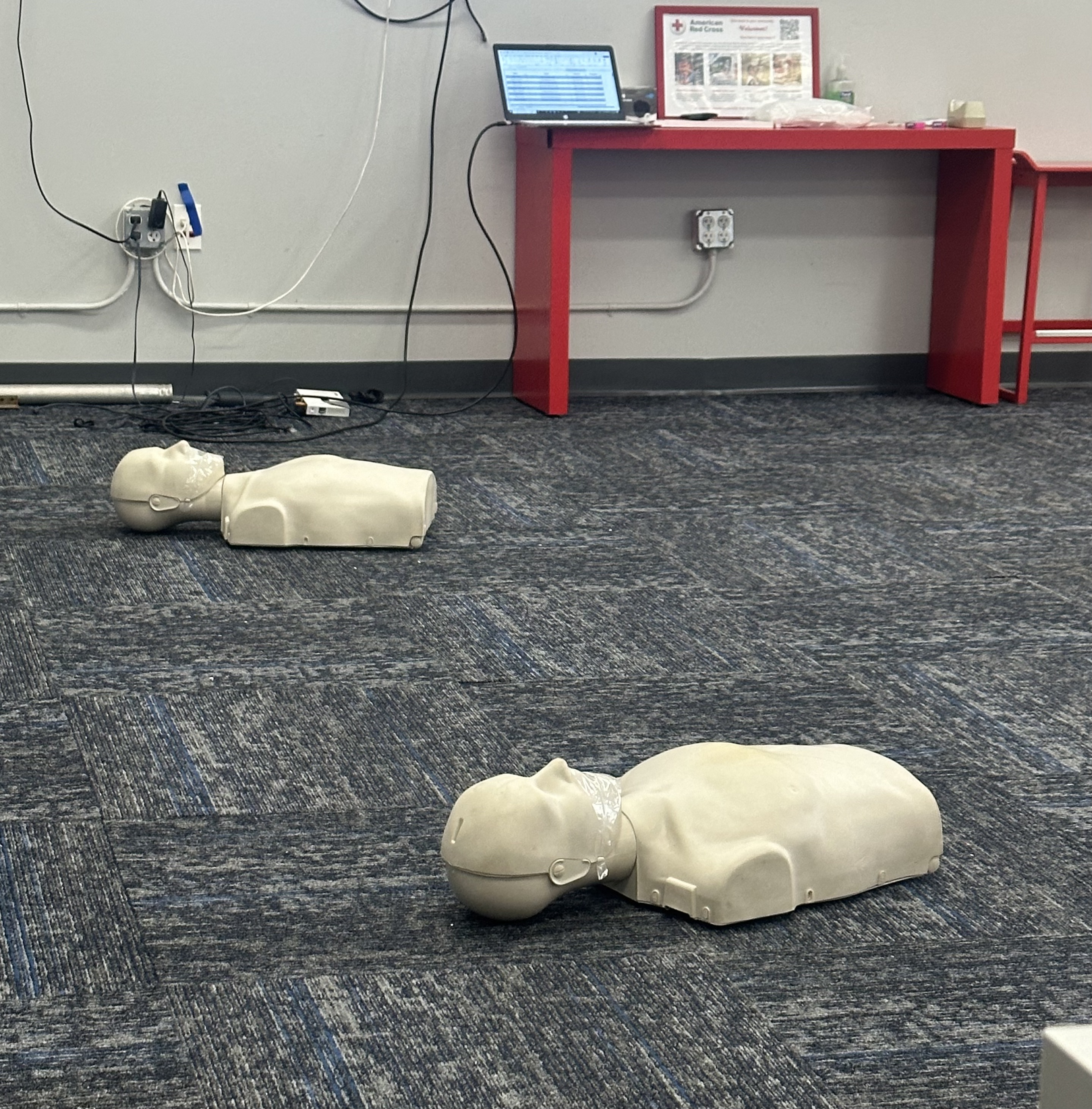
I signed my wife and me up for a CPR class and stocked up on first aid supplies. I pulled the trigger on a few investments I’d been sitting on. I’ve folded George Raveling’s line—choose to be happy, or very happy—into my daily affirmations. And I spent months immersed in Peter Attia’s Outlive, swapping in his diet and exercise advice until the scale started moving. I’m down 25 pounds so far.
Knowledge without action is like buying a “Come and Take It” bumper sticker but driving a Prius. The aggression is there, but the outlet isn’t.
Knowing is the easy part. The value is in the doing.
Before she became a symbol of courage, Etty Hillesum was a young woman who didn’t know what to do with herself.
She was educated. She taught Russian. She dreamed of becoming a writer. She was boy-crazy, prone to daydreaming, and aware that she spent too much time staring at herself in the mirror. She worried she might inherit the mental illness that ran in her family. She described herself as a “patchwork” of contradictions—ambitious and lazy, spiritual and petty, sharp-minded and easily unsettled.
In many ways, she was just like us.
In many ways, but not all.
Because the times she lived in were nothing like ours.
Etty was a Dutch Jew in Amsterdam during the Nazi occupation. At 27, she began keeping a diary. She wrote in it for only two years, until she was murdered, along with her family, in Auschwitz.
This much we know.
What’s harder to understand is what happened within those two years.
Because somewhere between the first pages—where she wrote about her self-doubt and restlessness—and the final entries she wrote from the transit camp at Westerbork, Etty underwent a transformation so profound that even scholars struggle to explain it.
It was the early 1940s. As she was untangling herself on the page, store owners were hanging “No Jews Allowed” signs in their windows. A Jewish professor and friend of Etty’s had hanged himself. Another had been murdered. Roundups began. Tens of thousands of Jews were deported to Westerbork, the transit camp that became the grim hub of Jewish life. People were selected each week and sent “to the East,” a euphemism everyone understood but could hardly bear to speak about.
By early 1942, in the middle of all of it, she wrote:
“It’s happened to me a few times recently… I stop with bated breath and have to ask myself: is this really my life? So full, so rich, so intense and so beautiful?”
How does a person, fully aware of the horror that is coming, still experience life as beautiful? How does someone refuse to hate—not in theory, but in the face of real, relentless evil? As we’ll see, it wasn’t because she was delusional.
When the train carrying Etty and her family finally left for Auschwitz, she threw a postcard from the window. It was found along the tracks.
On it, she wrote that they had left the camp singing.
Singing.
Not because she was naive. Not because she didn’t understand what awaited her. She knew. She had seen enough to know.
And still, she chose to meet life as it was, without turning away from it, without hardening herself against it.
She refused to add even “one more atom of hatred” to the world.
She found the light in herself and radiated it outward to everyone around her.
The question is not who she was, but how she became that way. This is my attempt to untangle that how, so that we might use some of Etty’s wisdom for our own dark times.
Make space for your sorrow
Etty Hillesum believed the worst thing in the world was hatred.
And hatred, she said, begins in our refusal to face our own sorrow.
If people bore their sorrow honestly, if they made space for it inside themselves, she believed the suffering in the world would begin to lessen. She writes:
“Give your sorrow all the space and shelter in yourself that it is its due. For if everyone bears his grief honestly and courageously, the sorrow that now fills the world will abate. But if you do not clear a decent shelter for your sorrow, and instead reserve most of the space inside you for hatred and thoughts of revenge—from which new sorrows will be born for others—then sorrow will never cease in this world and will multiply.”
These four walls, or those four—what’s the difference?
Etty had built such a fortress inside herself that, despite the horror around her, she was able to continue living her own life. The Nazis had physical power over her, but they could not touch her soul.
“Within these four walls or within four other ones, what does it matter? If you have a rich inner life . . . . there probably isn’t all that much difference between the inside and outside of camp.”
There’s always a new cause for satisfaction
Each week at camp Westerbork, a list was posted. If your name was on it, you would be deported to Poland, which usually meant Auschwitz—a place no one had any illusions about.
Occasionally, a different list was posted: the names of people who would be allowed, at least temporarily, to go home. For those not on the list, the obvious reaction would be: Why them and not me?
Etty’s instinct was different.
One time, when a list was posted naming sixty people who were allowed to go home, Etty’s name was not on it. Not only did she not envy those going home, she felt fortunate to be staying, because by staying at camp, she would be able to help her parents.
“Luckily I am not one of those sixty,” she wrote to a friend, “so I can keep on protecting my parents as best I can. You see, there is always a new cause for satisfaction.”
Have faith
Victor Hugo wrote that a flourishing person is like the human eye, “which adjusts to gloom by becoming more open,” David Von Drehle writes, “‘just as the soul dilates in misfortune and in the end finds God.’” This is exactly what happened to Etty.
It was horror and terror that brought her, literally, to her knees. She “found herself” praying on the bathroom mat, moved by “a great urge from a deeper part of herself than her mind,” even as the “rational atheistic” part of her looked on in amazement and she felt embarrassed. It was God—whom she describes as the voice inside her—that she found and kept returning to as the outside world grew darker. Her faith gave her strength.
If God cannot help us, we must help Him
I’ve heard people ask—and have asked myself—if God is all-powerful, why does He let bad things happen? And if He’s not all-powerful, why pray?
“It’s not God’s fault that things go awry sometimes,” Etty wrote. “The cause lies in ourselves. And that’s what stays with me, even now, even when I’m about to be packed off to Poland with my whole family.”
She prayed:
“[…] one thing is becoming increasingly clear to me: that You cannot help us, that we must help You to help ourselves. And that is all we can manage these days and also all that really matters: that we safeguard that little piece of You, God, in ourselves. And perhaps in others as well. Alas, there doesn’t seem to be much You Yourself can do about our circumstances, about our lives. Neither do I hold You responsible. You cannot help us, but we must help You and defend Your dwelling place inside us to the last.”
Prayer was how she protected the place inside her that she could return to for refuge.
Grow independent from external things
While walking alongside her brother, Mischa, one day, Etty became overwhelmed by the thought of their eventual parting. She turned to him and said, “Perhaps we really have no future.”
“Perhaps,” Mischa replied, “but only if you take a materialist view…”
This was an essential key to her growth: the firm belief that nothing outside her could harm her. Nothing could touch the serene place inside her unless she allowed it. And she would not allow it.
“We must grow so independent of material and external things that whatever the circumstances our spirit can continue to do its work.” Even in the camps, “I shall simply have to carry everything inside me. One ought to be able to live without books, without anything. There will always be a small patch of sky above, and there will always be enough space to fold two hands in prayer.”
Destroy in yourself what you wish to destroy in others
One winter day, standing at a tram stop in occupied Amsterdam, Etty’s friend Jan asked bitterly, “What is it in human beings that makes them want to destroy others?” Etty responded, “Human beings, you say, but remember that you’re one yourself. The rottenness of others is in us, too.”
The solution to the biggest problem in the world—hatred—was introspection: “to turn inward and to root out all the rottenness there. To destroy in ourselves what we wish to destroy in others. And that seems to me the only lesson to be learned from this war. That we must look into ourselves and nowhere else.”
“Why is there war?” she mused. “Perhaps because now and then I might be inclined to snap at my neighbor.”
The materials for a good life are the same everywhere
Professor Andō Fumio says that one of Etty’s greatest achievements was recognizing that the basic materials for life are the same everywhere.
In Amsterdam or Westerbork, in a quiet room or a crowded barracks, the raw ingredients of life remained: time, attention, people, the sky, her own thoughts.
And because the essential things of life are everywhere, she was able to find beauty everywhere. She was able to be grateful for everything.
As she put it, if “in a labor camp I should die within three days, I should lie down and die and still not find life unfair.”
Everything is fine just as it is
Etty would cringe when people said things like, “We’ve got to make the best of things.” It suggested a sharp divide between the life we’re “supposed” to have and the shabby substitute we’re stuck with now. That mentality felt false to her, like pretending to be cheerful on a sinking ship.
“Everywhere things are both very good and very bad at the same time. The two are in balance, everywhere and always,” she wrote.
“I never have the feeling that I have got to make the best of things; everything is fine just as it is. Every situation, however miserable, is complete in itself and contains the good as well as the bad.”
What made her so joyful, even in a transit camp, was her ability to embrace life as a single, meaningful whole. Barbed wire and purple lupins, transports and sunsets, fear and gratitude: all of it belonged.
“Flowers and fruit grow everywhere they are planted, isn’t that what it all means?”
Refuse to hide from the world
Defying her friends’ pleas, Etty refused to hide from the Nazis. “She didn’t want to desert her parents, but more than that,” Carol Lee Flinders writes, “it just felt morally wrong to her that anyone would concentrate on personal survival who could be reaching out lovingly to others instead.”
Klaas Smelik, the man to whom she would later entrust her diaries, remembers his unsuccessful attempt to “kidnap” Etty and put her into hiding. Convinced she didn’t understand the danger she was in, he grabbed her to pull her to safety. She wriggled free, stepped back, and said, “You don’t understand me.” When he admitted he didn’t, she said, “I want to share the destiny of my people.” At that moment, he knew there was no hope of “rescuing” her. She would not allow it. Besides, she argued, what did it matter whether she went, or someone else?
And this was a woman who had everything going for her! She had family and friends, a law degree, ambition, curiosity, and a full, vibrant inner life.
Yet she refused to hide from her fate for the same reason she refused to hide from sorrow: to hide from it would be to hide from life itself. And beyond that, how could she run and hide when there were so many people around her she could help?
Listen, listen, listen
The whole of Etty’s transformation was built on something simple: listening. More specifically, listening to what was going on inside her. It was this kind of listening, practiced through journaling, that transformed her so profoundly.
Each morning, she resolved to turn inward for a half hour. “Thinking gets you nowhere,” she wrote. “You have to make yourself passive then, and just listen. […] Not thinking, but listening to what is going on inside you. If you do that for a while every morning . . . you acquire a calm that illuminates the whole day.”
Accept all of yourself so you can accept all of others
One evening, as she biked through Amsterdam to meet her brother, she fell into a sadness over some perceived flaw in herself. As she rode, her thoughts drifted to a kind university professor who had recently died in a concentration camp. The weight of it all—her own self-judgment, his death, the state of the world—began to settle in.
But instead of rejecting her feelings, she opened herself to them, realizing “that sadness, too, was part of my being.”
From this she realized that accepting all parts of herself made it easier to accept all parts of others, too.
Hardy, not hard
Perhaps one of the most amazing things about Etty was that she refused to let her heart grow numb.
That was her greatest fear: numbness of heart. To become numb would close her off to her inner life and prevent her from bearing witness to what was happening around her. “Eager as she was to affirm the inherent meaning and beauty of life, she would not permit herself to do so without at the same time recognizing the full depravity of what was going on around her,” Carol Lee Flinders writes. She “would uphold that part of the assignment she had imposed upon herself: to be an unblinkered witness to history, but one who would not give way to hatred.”
Root out personal desires and become whole
Part of Etty’s ability to resist hatred and numbness was rooted in something less obvious: her relationship to personal desire.
She noticed that her suffering often traced back to a single question—What do I want?
In 1942, she was in a low mood that lingered for days. When she looked closely, she saw the source clearly: her relationship with Spier (her therapist, with whom she had a complicated, semi-romantic relationship). Beneath her emotions, she had a longing for a physical relationship with him. She had an urge to possess him, to make him hers.
She realized her low moods were the result of a desperate need to place him at the center of her life. And here’s the paradox: when she let go of that need, it brought them closer. By no longer trying to “own” him, they were no longer two separate beings.
She learned to redirect and soften her desires. She saw more clearly the connectedness of all things. With a connection to everything, how could she hate? Hatred requires separation. It requires measuring and demanding and defending.
By lessening her desires, she was able to connect more deeply with others, with life, and, most importantly, with herself. She was becoming whole.
Let life be more than a thousand everyday cares
Etty would pray that her days be made up of more than just thoughts of food and clothing and the cold and her health. It didn’t matter if she had to sleep on a hard floor, or that she was no longer allowed on certain streets.
“These are minor vexations,” she wrote. “So insignificant compared with the infinite riches and possibilities we carry within us. […] Let every day be something more than a thousand everyday cares.”
Face the facts
She watched people around her cling to fantasies of rescue. They convinced themselves that help would come, that the war would suddenly change course, that they would be spared. She understood the longing behind those hopes, but she also saw how they kept people from engaging with the reality in front of them.
Etty was interested in the facts. More to the point, she was interested in how she could grow through the facts. Life is not an illusion or a hope for a different reality. Life is what it is—facts and everyday struggles. “Etty did not flee from this difficult situation,” writes Andō Fumio, “but regarded the facts as the meaning of life itself. She sought what she could do and achieve even under the most difficult conditions.”
Only by fully embracing this moment could she hope to fulfill her potential.
Life is one meaningful whole
Etty rejected the idea that life could be divided into what it should be and what it was. This is perhaps the most profound thing about her: that she could face unimaginable terror and still find life beautiful. Not just the obvious parts, but all of it.
During a time when she was temporarily allowed to go home, she reflected on camp Westerbork:
“How is it that this stretch of heathland surrounded by barbed wire, through which so much human misery has flooded, nevertheless remains inscribed in my memory as something almost lovely? How is it that my spirit, far from being oppressed, seemed to grow lighter and brighter there? It is because I read the signs of the times and they did not seem meaningless to me.”
She reminisced about her former life, about reading Rilke and Jung at her writing desk. “Surrounded by my writers and poets and the flowers on my desk, I loved life. And there among the barracks, full of hunted and persecuted people, I found confirmation of my love of life. Life in those drafty barracks was no other than life in this protected, peaceful room. Not for one moment was I cut off from the life I was said to have left behind. There was simply one great, meaningful whole.”
To ruminate is to miss out on life
Etty understood that rumination was not the same as reflection.
She knew how things like fantasies and sad memories could distract her for days on end—to no good end. It wasn’t that there was anything inherently immoral about this, but she saw clearly that it cut her off from reality.
“Observing the people around her,” Carol Lee Flinders writes, “she sees that many of them play and replay memories of fear, grief, and anger with the same avidity she’d devoted to sexual fantasies, and that because they cannot direct their attention at will, they no longer experience life directly.”
This thought helped me fall asleep the other night. I told myself: Don’t ruminate. The things keeping you up are in your head. The reality is that you’re lying in bed. Nothing else is happening. Be where your body is. Fall into the present moment, and fall asleep.
Keep seeking beauty
Walking alongside the barbed wire fences, she would find herself overcome by how beautiful life was. The beauty of a magnolia could almost overwhelm her.
For Etty, this wasn’t just appreciation—it was survival. An eye for beauty helped preserve her humanity. It allowed her to keep seeing clearly while others were consumed by resentment and reactivity. Beauty sharpened her vision when hatred threatened to cloud it. Seeking beauty was her way of staying human.
Transcend yourself
Etty put her inner world in order, wrestled with herself, and found a deep peace. Her spiritual quest allowed her to see the world differently. It’s how she could describe the beauty of life, the birds in the sky, the peaceful purple lupins, the sun shining on her face, the barbed wire, and the mass murder.
But that inner work did not end with her. By rooting out personal desires and trivial preoccupations, she made more room in herself for other people. She became a haven for others—a person able to absorb sorrow, offer comfort, and remain present to those around her.
And that is what made her transformation transcendental.
Because if that had been the sum total of her story, if she had only retreated inward, she wouldn’t have become the person she became. What made her so remarkable is that she went beyond herself.
Each week at Westerbork, a large group of people would be chosen to board the train for Poland—the destination Auschwitz—where they would likely be murdered. If your name wasn’t called, you breathed a sigh of relief. You survived another week.
Etty did not use that reprieve to retreat further into herself. Instead, she used it to comfort terrified mothers with crying babies. She used it to write reassuring letters to friends. She used it to make sure her struggling parents had everything they needed. When she had nothing else to give, she gave kindness and humor. People described her as “radiant.” She was a light that shone everywhere she went.
“Our work can be done wherever there is a human being, be he only a camp guard,” she wrote.
And she did this work right up until the end.
Her transcendence was not about escaping the world, but about seeing it whole and choosing to remain true to herself. God and horror, beauty and atrocity…to view it all in the same frame and choose love anyway.
A few weeks ago, my wife, Courtney, stabbed herself.
She meant to stab the sweet potato in her hand, but missed. The point of the steak knife plunged into the meaty part of her left palm, above her wrist, and a geyser of blood shot across the kitchen island.
I went from innocently peeling the shell off a hard-boiled egg to feeling absolute terror in a matter of seconds.
Courtney—who never even tells me when she has a headache, let alone goes to the doctor for anything that isn’t absolutely necessary—pushed a dish towel into the gash and calmly said, “We have to go, now.”
I didn’t know where she’d cut herself—if she’d sliced open her wrist or hit something important. All I could think was that the human body only holds six pints of blood (which I now know isn’t true; it’s closer to ten) and that she was bleeding badly.
I ran to the garage and yelled, “Get in the car!” I had the wherewithal to grab her ID, but that was it. I didn’t even put shoes on. I flew out of the driveway and broke approximately fifteen traffic laws in the two miles between our house and the ER.
I slammed the car into park at the entrance and rushed her through the sliding doors. Shaking and out of breath, I asked a nurse in the lobby to take a look. As she pulled off the towel, I warned her to be careful; blood might still be squirting. I cringed as I looked to see how bad it was and… it actually didn’t look too bad. The dish towel was soaked end to end in blood, but the bleeding had stopped.
Maybe I had overreacted.
A doctor saw us within twenty minutes, cleaned out the wound, patched it up, and sent us on our way.
When we got home, I replayed everything in my mind. Why had I run around like a chicken with its head cut off? Why was I so unprepared? I felt guilty. I decided never again would I feel so helpless. There’s no excuse for not being prepared. So I watched videos on the Heimlich maneuver, bought a LifeVac travel kit, a second fire extinguisher, and hemostatic gauze, and signed us up for a CPR/First Aid class at the Red Cross.
The class was three and a half hours long, and there were nine other students. On a wall-mounted TV, the instructor played the first video: how to properly wash your hands. Courtney turned to me and whispered, “You owe me for this.”
After that, the instructor briefly discussed the material we would learn. She warned that if you save someone’s life, don’t let them repay you with, say, a steak dinner. This could lead to a lawsuit. Courtney grabbed the pocket journal I brought to take notes and wrote, “Do not accept steak dinners.” I had to bite my tongue to keep from laughing.
The next video showed an elderly woman having symptoms of a heart attack. “Honey, what’s wrong?” her alert husband asks. “I’m having chest pains,” she replies. “No, no, no, this isn’t happening,” he moans. Just then, their son—clearly the hero—enters the room.
My journal open, pen at the ready, I leaned forward. Here we go. The secrets of how to save a life were about to be revealed and I, Emily Yaskowitz, would henceforth be prepared to do just that—save lives. What’s the son going to do? I thought. What at-home machine has he invested in that will now pay off and save her life? What tricks would he perform?
The son asks his mom what’s wrong. “I’m having pain in my chest,” she winces. Turning to his dad, the son says, “Call 9-1-1.” He turns back to his mother. “Here,” he says, “chew these aspirins.” The woman chews and rubs her chest while they wait for help. When the first responders arrive, they load her onto a gurney and send her away in an ambulance. The dad is overwhelmed with gratitude. “Son, I don’t know what I would have done without you.” The video ends.
By this point I wanted my money back.
Forty-five minutes in and we’d learned not to accept gifts and to call 9-1-1 in an emergency.
Over the next few hours, though, we practiced CPR on dummies, tied tourniquets, and learned what to do if someone is having a seizure or going into shock. Still, most of what we talked about wasn’t new. By the time the class was over, I realized that was the whole point.
I recently read that Minnesota Vikings head coach Kevin O’Connell briefly played quarterback in the NFL. He threw six passes as a New England Patriot and was cut after one year. He then signed with the Lions and was traded five days later. He auditioned for teams constantly, and it rarely went well. As Seth Wickersham writes, “He always wanted to create ‘the wow factor,’ […] an exceptional throw that would make a team believe. ‘I learned that’s the last possible thing you should do,’ he says now.”
He learned that good quarterbacking involves taking care of the mundane. “He watched Brady and Joe Montana execute game-winning drives in the Super Bowl. What stood out was how unspectacular they were when the stakes were the highest. ‘If they called the same play in the middle of spring practice, they would have executed it the same way,’ [O’Connell] says. ‘They weren’t trying to do anything other than just play the position consistently at a high level.’”
That’s what I learned in the CPR class. It’s about executing the basics—preparing and practicing.
“We don’t rise to the level of our expectations,” the Greek poet Archilochus said. “We fall to the level of our training.”
It’s not about dramatic heroics, but consistent steadiness.
That’s true in the ER, and it’s true everywhere else.
No matter how many influencers or life hacks there are, I’ve yet to find a better prescription for a good life than this: go to bed early, get up early, journal, read, exercise, do the right thing, care about others, and eat decently.
Do these things consistently and in a few years you’ll be a different person.
But that’s the thing: we already know this. The problem is that it’s terribly unsexy. It’s boring. That’s why there’s always a new life hack or mud cleanse or cage-free yoga class or whatever.
It’s why someone will attend a self-help seminar or watch motivating YouTube videos and still never change. The important stuff is often so straightforward—like calling 9-1-1 or calmly applying pressure to a wound—that it can be easily overlooked.
We know we should save and invest—that fortunes aren’t made from windfalls but from small, consistent savings. We know we keep our job not because we have a revolutionary idea, but because we show up each day and stay steady. “Your teeth don’t not rot because you go to the dentist twice a year,” Simon Sinek said. “They don’t rot because you brush them for a couple minutes every day. It’s the little things adding up over time.”
Four years ago I could barely run half a block without stopping. Last week I spontaneously ran a 4.5 mile route—one I’ve never run before—in a little over a half hour, and I could have kept going. And I’m not saying that to sound impressive, because it’s not impressive. What else is supposed to happen when you run three to four miles a day, four days a week, for four years, while gradually increasing your speed?
I fell to the level of my training.
Bob Dylan didn’t wake up one morning and write “Blowin’ in the Wind” because genius struck. “These songs don’t come out of thin air,” he said. “If you sang ‘John Henry’ as many times as me—if you had sung that song as many times as I did, you’d have written, ‘How many roads must a man walk down?’ too.”
He sang the same old songs so many times that when he began to write his own lyrics, he felt like he “was just extending the line.”
He fell to the level of his training.
Feeling confident in an emergency is less about skill than preparation. You don’t need to know how to perform an emergency thoracotomy, but you should have the Heimlich maneuver down pat. You should be prepared enough that if an emergency happens, you can keep your head and assess the situation calmly—exactly the opposite of what I did when I showed up at the ER in my socks.
This matters in big things and small ones. Brilliance and willpower are unreliable.
We fall to the level of our training.
That’s true in an ER lobby. It’s true in your finances, your career, your whole life.
It comes down to doing the most important, basic things consistently.
Go to bed early. Get up early. Journal. Read. Move your body. Tell the truth. Do the right thing. Go easy on the sweets.