If you’re struggling to write a book, here’s a great way to get unstuck:
Write hundreds of tiny books instead.
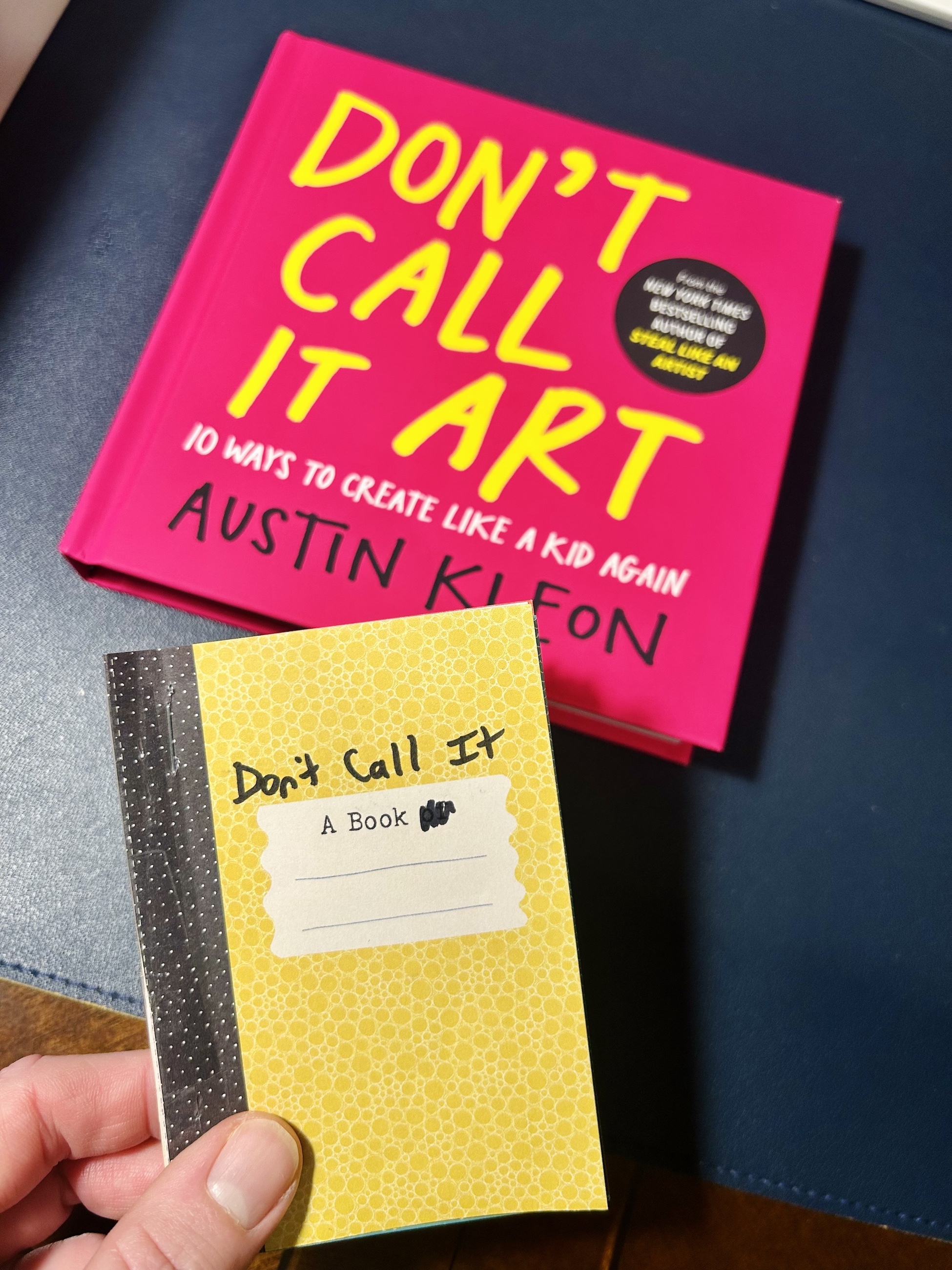
Inspired by Austin Kleon’s new book Don’t Call It Art, the words poured out of me when I changed my tools (paper scraps instead of Google Docs), scaled down the size, and decided not to call it a book.
In the 1950s, a Johns Hopkins biologist named Curt Richter dropped rats into glass cylinders half-filled with water and watched them swim.
The rats paddled around in frantic little circles, searching for a way out. Richter, as Nir Eyal writes, sat nearby with a stopwatch and recorded how long they kept going before they stopped trying.
Most lasted around fifteen minutes.
What’s interesting is that the rats were not drowning from exhaustion. Their muscles still worked, their lungs were fine. They had just decided, in their little rat brains, there was no point.
So Richter ran the experiment again, but with one small change.
He dropped a fresh group of rats in and watched them swim. Right when each one was about to give up, he reached in, scooped the rat out, dried it off, let it catch its breath, and plopped it back in the water.
How much longer would you guess those rats swam?
Thirty minutes? An hour? Double their original time? Triple it?
The answer: sixty hours.
Not sixty minutes. Sixty hours. Two and a half straight days of paddling. Roughly the amount of time it takes elite ultra-marathon swimmers to swim from Cuba to Florida.
They were the same type of rats as the first batch, with the same bodies. The only difference was that they now believed rescue was possible.
When I’m on the treadmill and my breathing is labored, I think about the rats.
I think about the rats when a blister on my foot is screaming, or when my mouth is painfully dry. Basically, I think about the rats when my brain is begging me to quit, but my body is still capable of continuing.
Marcus Aurelius said it’s shameful for the mind to give up when the body is still going strong. That’s what the rats remind me of. With the first group of rats, their minds had given up before their bodies.
The second group didn’t suddenly become stronger. They didn’t get better at swimming. Nothing about the water changed.
They had been pulled out once before. They knew, in whatever small way rats know things, that rescue could come.
So they kept swimming.
Their only job was to keep going.
Don’t Get Stuck in Preparation
Before landing roles in Euphoria and The White Lotus, Lukas Gage struggled to break into the industry.
At eighteen, he moved to LA and enrolled in an acting class while searching for an agent. But it turned out to be harder than he imagined. No one would talk to him. Maybe he just wasn’t cut out to be an actor.
Feeling low, he asked his acting teacher, Leigh Kilton-Smith, if she had a moment to talk. He confessed his doubts about his abilities.
“I really need you to tell me the truth,” he said. “What’s the worst thing about my acting?”
“You know my biggest criticism right now of where you are in your career,” she said. “I see your plan.”
“What?”
“Did I stutter? I said I see your plan. I see that you’ve done the work and now a day later you’re stuck in preparation, and you haven’t done the necessary work to let your plan go. [. . .] You’re relying on your plan, and that’s when your work runs the chance of being dull and uninteresting. You’re many things, Lukas, but uninteresting ain’t one of them.”
He thought he might cry. She was right, he knew, but he wasn’t ready to fully accept it.
“But if I don’t know what’s going to happen—”
Suddenly, something flew toward his head.
Reflexively, he reached out and grabbed it: a tissue box his teacher had thrown at him.
“What the actual fuck?”
“Bet you didn’t see that coming, did you?”
He had not.
“And yet you caught it. You didn’t have to think about it. You didn’t have to reference any notes on how to catch a tissue box being thrown at your head by your crazy acting teacher. You simply caught it, instinct kicked in, and you were in a state of trust.”
“Trust!” she continued. “Trust in yourself. It’s what’s missing from your characters, and from you, Lukas. The art suffers and runs the risk of looking and feeling and smelling and being like everyone else.”
Trust.
That was it.
The work he’d already done was in him. He didn’t need to cling to the plan anymore. He needed to trust himself enough to let it go.
“I can only say all this,” she added, “because I’m also deeply and profoundly afraid every moment of every day. I am a fuckup, I’m a fraud, but either I trust my life experiences and my path or I become the world’s oldest hooker.”
“Fuck you: you know how to do this.”
Early in his career, Breaking Bad star Bryan Cranston was auditioning constantly.
After each audition, he would pace by the phone, anxious to hear if he had gotten the part.
“And then when I heard I didn’t get the part, I’d marinate in disappointment and introspection. Could I have done something differently?”
His wife eventually set him up with a self-help coach, who told Cranston he needed to focus on the process, not the outcome.
That’s when everything changed.
By detaching from the outcome, Cranston put himself back in control. He realized auditions weren’t about competing with other actors. They were about giving something.
“I wasn’t there to get a job. I was there to do a job. Simple as that. I was there to give a performance.” Whether or not he got the part was not up to him, and therefore not his concern. Instead of pacing by the phone after each audition, he would throw the script in a basket when he got home and forget about it.
“I’d let go. You can’t fake letting go. You have to really genuinely detach from it. If I’d get a callback, I’d fish out the script and say, ‘Oh yeah, I remember this guy.’”
Auditioning became enjoyable.
How could it not?
With the outcome no longer in charge, with his trust placed in himself and in the work instead of the result, he walked into each audition holding all the power.
That’s the thing about trusting yourself: it’s more a decision than a feeling.
When Christina Applegate first started working on the set of Anchorman, she had never done improv comedy. She walked around asking anyone who would listen, “Teach me, Obi-Wan.”
Steve Carell insisted that she didn’t need to be taught. She could do it on her own.
In 1864, a young man named Samuel Scudder arrived at Harvard to interview with the celebrated biologist Louis Agassiz. He likely expected a conventional test—something meant to measure what he knew, or to probe his intellect.
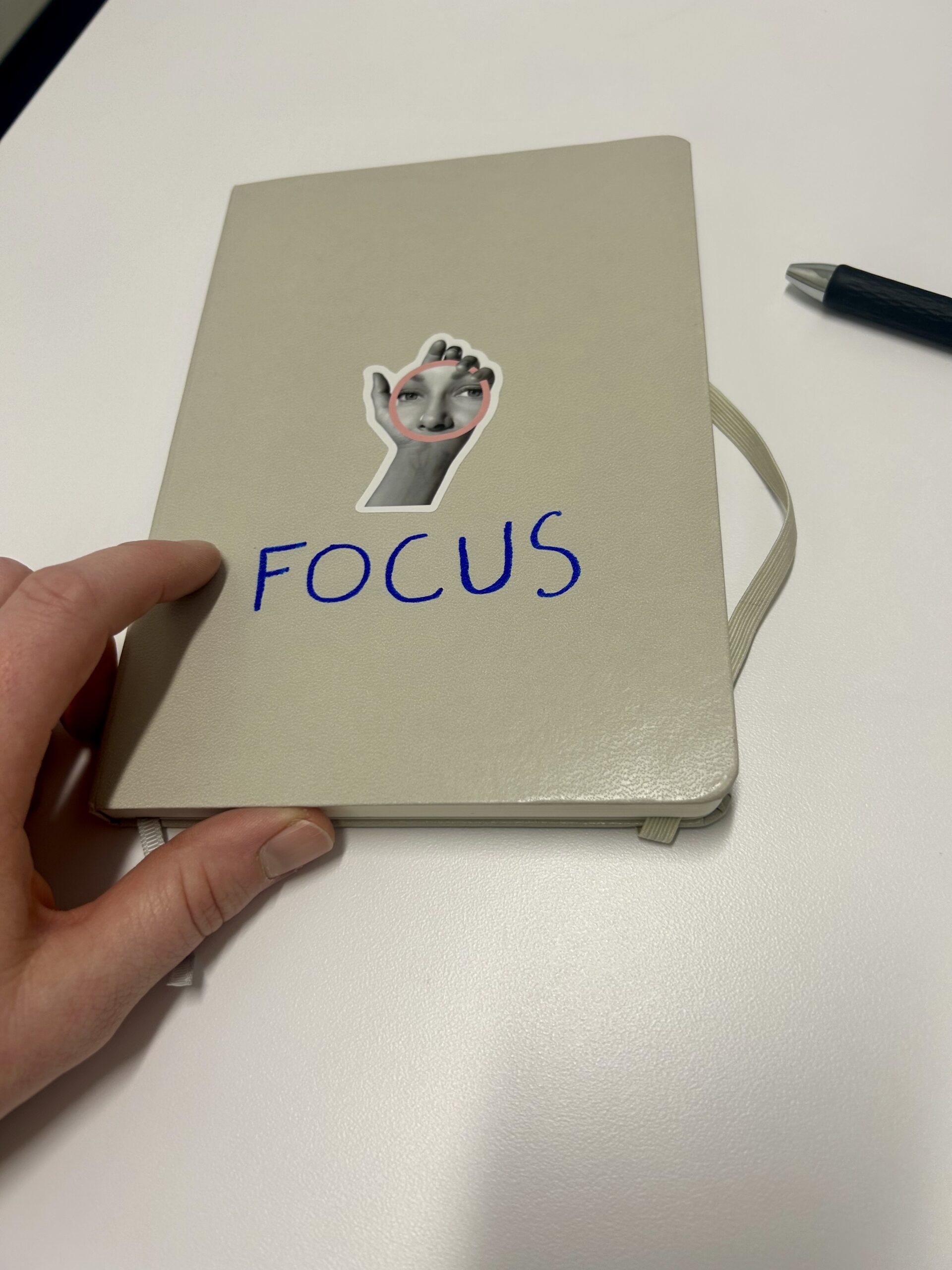
Instead, Agassiz placed a preserved fish in front of him and gave a single instruction: “Look at your fish.” Then he walked out of the room.
As Ryan Holiday writes in Wisdom Takes Work, hours passed. Scudder fought boredom. He examined the fish from every angle he could think of. He handled it, turned it over, traced its contours, counted its scales. Maybe it was a test of patience. With nothing else to do, he drew it.
When Agassiz returned, he was unimpressed. He told Scudder that he hadn’t truly seen the fish yet and urged him to look again. Then he left.
This pattern continued for days.
Each time Agassiz returned, he asked what Scudder had observed. Each time, the answer fell short. Eventually, Scudder could only admit the truth: “I see how little I saw before.”
That admission marked a turning point. After another long stretch of uninterrupted looking, something finally clicked. Scudder began to notice the fish’s underlying order—its symmetry, the way its organs mirrored one another on both sides. When he offered this observation, Agassiz responded with enthusiasm: “Of course! Of course!” When Scudder asked what he should do next, Agassiz replied, “Look at your fish.”
In the end, Scudder discovered… well, nothing.
But as Scudder later explained, “it was a deeper lesson,” Ryan writes, “perhaps the most important one he ever got in his career as a scientist: the power of focus. The importance of intensely looking, with dedication and without interruption, at something as simple and ordinary as a fish in order to truly see it. It was, [Scudder said], ‘a lesson whose influence has extended to the details of every subsequent study; a legacy the Professor had left to me, as he has left it to many others, of inestimable value, which we could not buy, with which we cannot part.’”
David McCullough uses this story in his writing classes. “Seeing is so important in this work,” he said. “Insight comes, more often than not, from looking at what’s been on the table all along, in front of everybody, rather than from discovering something new. Seeing is as much the job of a historian as it is of a poet or a painter, it seems to me. That’s Dickens’ great admonition to all writers, ‘Make me see.’”
Nobody bothered to look closely enough
David McCullough recalls his own Agassiz Jr. moment while writing Mornings on Horseback. He was trying to understand what had caused Theodore Roosevelt’s severe asthma attacks as a boy—episodes so intense they sometimes left his family fearing for his life.
McCullough consulted physicians. One asked whether there had been a cat or dog in the house, or whether the attacks coincided with pollen season. A psychosomatic specialist wondered if they happened around emotionally charged events like birthdays and holidays.
Using young Theodore’s diary entries, McCullough made a calendar of what he did each day. “In pencil, I wrote where he was, who was with him, what was going on, and in red ink I put squares around the days of the asthma attacks. But a little like Scudder and the fish, I couldn’t see a pattern.”
Then one day, as he looked at the calendar on his desk, he noticed something: every asthma attack happened on a Sunday. McCullough asked himself what Sundays meant in Theodore’s childhood. And then the answer became clear. If Theodore had an asthma attack on Sunday, he didn’t have to do something he hated: go to church. Instead, he got to go to the country with his father—just the two of them. For young Theodore, this was heaven.
This didn’t mean that the asthma attacks were planned, but the anxiety brought on by the prospect of going to church likely triggered them. (A high price to pay, because the attacks were horrible.) Other things may have contributed to the attacks, but the Sunday pattern was too pronounced to be coincidental.
“The chances of finding a new piece are fairly remote—though I’ve never written a book where I didn’t find something new—but it’s more likely you see something that’s been around a long time that others haven’t seen. Sometimes it derives from your own nature, your own interests. More often, it’s just that nobody bothered to look closely enough.”
What had been there all along
DNA is the master cookbook of who we are and how we function. Its sibling, RNA, is the messenger. RNA tells our cells what to do.
In the early 1980s, scientists had discovered something crucial: RNA could replicate itself—by itself. “If some RNA molecules could store genetic information and also act as a catalyst to spur chemical reactions,” Walter Isaacson explains, “they might be more fundamental to the origins of life than DNA, which cannot naturally replicate themselves without the presence of proteins to serve as a catalyst.”
In 1998, biochemist Jennifer Doudna was on a mission: to show how, exactly, RNA could replicate itself. First she would need to know what an RNA model looked like. Back in the 1970s, researchers had mapped the structure of smaller, simpler RNA molecules. But when it came to larger RNAs, progress stalled. For nearly twenty years, scientists found it difficult to isolate them clearly enough to understand their structure. “Colleagues told Doudna that getting a good image of a large RNA molecule would, at that time, be a fool’s errand.”
But if she wanted “to understand the workings of a self-splicing piece of RNA, she would have to fully discern its structure, atom by atom”—something most scientists at the time believed would be too difficult, if not impossible, to do. “Hardly anyone was trying anymore,” famed biologist Jack Szostak recalls.
It took two years, but Doudna and her partner, Jamie Cate, did it. They produced a working model of the structure of an RNA molecule—work that would eventually lay the foundation for CRISPR, the most widely used gene-editing system today.
When they started, RNA was old news. But by giving it sustained, almost stubborn attention, they discovered something entirely new.
It hadn’t been impossible after all. It’s just that no one else bothered to look closely enough at what had been there all along.