When Harry Truman chose Dan Acheson to be the Secretary of State, Acheson said he was worried that he “was not qualified to meet the demands of the office,” McCullough writes. “This, responded Truman, was undoubtedly so, but then he could say the same for himself, or any man. The question was whether he would do the job?”
In casual conversation Truman would often say there were probably a million other men who would make a better president than him. “But that was not the point. He, Harry Truman, was the President.” He had to answer the call. “I have a job and I have to do it,” Harry would say. “And the rest of you have to help me.”
Fill up a bunch of pages with blah-blah-blah
One of the most damaging ideas to creativity is to think that if you can’t win, you shouldn’t play. “I wish that Harper Lee had kept writing,” Elizabeth Gilbert writes in Big Magic. “I wish that, right after Mockingbird and her Pulitzer Prize, she had turned out five cheap and easy books in a row—a light romance, a police procedural, a children’s story, a cookbook, some kind of pulpy action-adventure story, anything. You might think I’m kidding, but I’m not. Imagine what she might have created, even accidentally, with such an approach. At the very least, she could have tricked everyone into forgetting that she’d once been Harper Lee. She could have tricked herself into forgetting that she’d once been Harper Lee, which might have been artistically liberating.” Gilbert goes on to say she wishes somebody had given Ralph Ellison and Scott F. Fitzgerald the go-ahead to just write anything and put it out there. And “any other creator, famous or obscure, who ever vanished beneath the shadow of their own real or imagined reputation. I wish somebody had told them all to go fill up a bunch of pages with blah-blah-blah and just publish it, for heaven’s sake, and ignore the outcome.”
How sly of him to teach
Trying to get inside the character of Walter White in Breaking Bad, Bryan Cranston needed to understand Walter. Walter was brilliant. He could have done anything he wanted in life. He started the company Gray Matters Technology with a friend, only to give it up and become a teacher. But why? Was it because he was afraid of failing? “What if everyone you knew growing up said you were destined for greatness, you couldn’t miss, and then you missed?” Cranston mused. “That’s not just failure. It’s collapse. It’s catastrophe.” Maybe that terrified Walt.
“And then I thought: How sly of him to teach. Why? That profession is unassailable. He could get away with saying: ‘I didn’t want the corporate world. I wanted to give my passion to the next generation. I had a calling.’ Teaching is a calling for many people. But not Walt. He was hiding out. Had he become a truck driver, people would have criticized him. But a teacher? Untouchable.”
The question is not whether you’re the best, or even whether you’re good. The question is will you do the job? Will you do the work you were called to do?
The other day, Courtney and I were lounging on the couch with the iPad propped up on the ottoman, watching the end of the Commanders-Lions game. I was looking at my phone, in my own world, when Courtney said, “Look how sad they are.”
I looked up toward the kitchen.
“No, on the iPad, the fans. Look how sad they are.”
I looked down. “Aw yeah, they do look sad.”
“Also, where were you looking?”
I laughed because I didn’t know. “I’m really not sure. I think I was looking in the general direction of where the (fur) kids are sleeping?”
“See, that’s what I’m talking about, that aloofness. As aloof as you are with things that matter, that’s how I need you to be with things that don’t. Instead of fixating on something trivial, treat it how you do everything else—say, ‘huh?’—and carry on.”
She was exaggerating, of course. Mostly. But it made me laugh, so it helped. She’d spent hours consoling me earlier over something silly. Something so minor it wouldn’t even register for most people had sent a wave of anxiety through me to the point of panic. Worse, it caught me off guard—I’m usually pretty laid-back. (Courtney says if I were any more relaxed, I’d fall off the earth.) But there I was, obsessing over something small, a “first-world problem,” which added a layer of guilt as if I wasn’t entitled to my feelings. (By the way, your feelings are always valid. Never diminish them.)
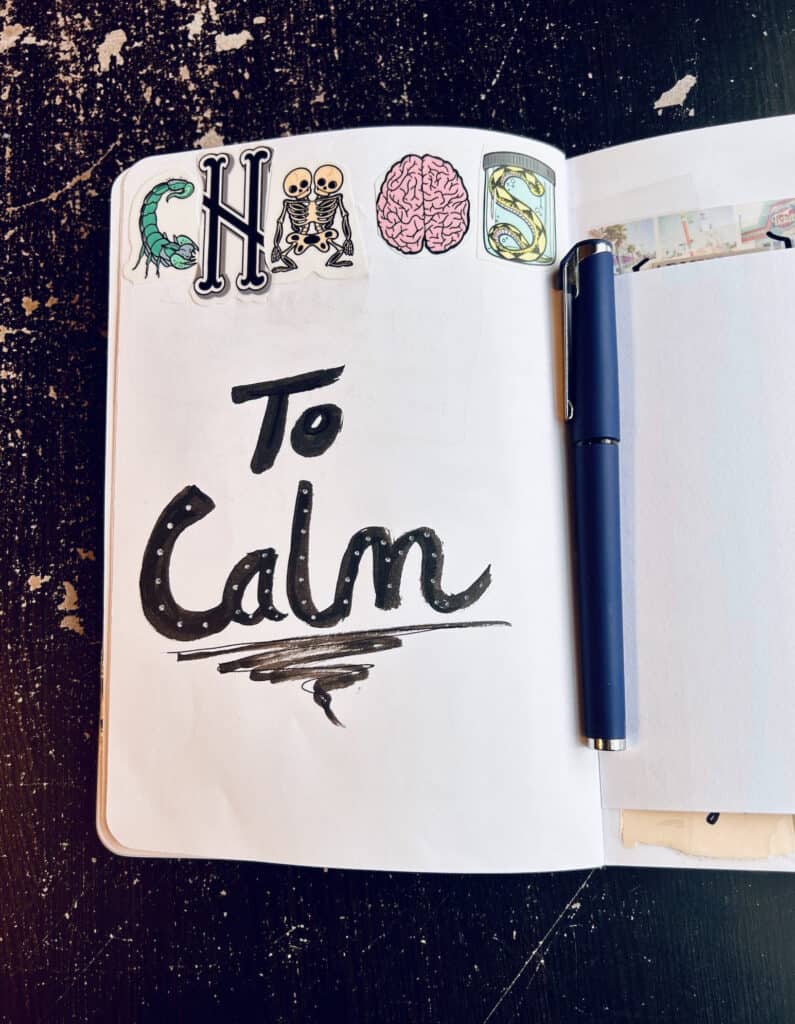
Anyway, when I began writing this newsletter at the beginning of the month, I intended to reflect on how, over the years, I’d moved from a chaotic way of being to a calmer one. But then, midway through the month, the anxiety spiral thing happened. Writing about calmness felt hypocritical and untrue.
I’ve realized that calmness isn’t some fixed state you achieve and then get to keep forever. It’s not like you cross a finish line one day and suddenly you’re immune to life’s chaos. No, it’s more like a practice—something you show up for every day, even on the hard days, maybe especially on the hard days. Calm is the small rituals that anchor us when the current pulls, the conversations we have with our fears to keep moving forward. Calm isn’t the absence of storms; it’s the strength we find amid them.
With this in mind, I decided I didn’t want to just list the broader mindsets that have helped me live more calmly—though those are important, too. I also wanted to include more immediate remedies: the things I say to myself if anxiety starts to tighten its grip. Because let’s face it, it’s one thing to work toward a calmer life overall. It’s another to navigate the chaos when it’s right in front of you.
So that’s what I’ve put together—a mix of both approaches. Some are daily habits, others are simple truths I lean on when I need to pause and reset. I think they can help you, too.
Look at the inner thing, not the outer
Courtney said this to me a few weeks ago, and I haven’t stopped thinking about it. Most of our frustrations are just stand-ins for deeper issues. Instead of looking at the external event that triggered us, we might do better to ask ourselves why, exactly, we are triggered. You hate the wall color you just spent weeks painting, and now you can’t stop thinking about it. Is it truly about the color? Or is something deeper—maybe a need for control or perfectionism—at play? If it wasn’t the wall color, what would you be obsessing about in its place?
Challenge your thoughts, question your feelings. Push past the obvious and go deeper. The trigger isn’t the story, it’s just the opening chapter. Get to the root because that’s where the real work—and the real healing—happens.
Cracks are where you grow
Courtney said this to me recently too. It echoes one of my favorite Stoic mottos: the obstacle is the way. Obstacles aren’t nuisances or setbacks—they are the essential leverage we need to hoist ourselves forward. They sharpen us, fuel us, and force us to adapt. They instruct, giving us hope. They point out our weaknesses, giving us strength. When life throws us a curveball, we can take a step back from our immediate reaction and choose to see the obstacle for what it is—an opportunity. And why would you ever despair over an opportunity?
Is this in my control?
This is the ultimate life hack: knowing what we control and what we don’t. Our thoughts and actions are in our control; everything else is not. This distinction underpins a calm, organized, and effective life. Not only does it distill life’s chaos into a manageable sphere, it also shows us where to direct our energy soit will actually make a difference.
In 2018, I set out to earn my degree in half the time, which meant juggling eight classes in the fall semester while working full-time. On paper, it sounds like craziness. But in practice, it wasn’t so bad. My workload had increased, but my stress didn’t because I knew what I had to do each day, and I did it. I didn’t waste time worrying about things I couldn’t control, like outcomes, or gossip, or breaking news, or sports speculations, or what other people were doing. I knew that if I tuned out the noise, did my best at work each day, and knocked out a few school assignments each evening, the rest would take care of itself. It’s incredible the calm and clarity you get from this question: What’s my job at this moment?
Quit smoking cigarettes
Ever notice how smokers seem perpetually stressed? I would know; years ago, I was one of them. I had bought into the myth that smoking relieves stress. (A myth perpetuated millions of times in movies: the sweat-drenched protagonist steadies his trembling hand, fumbles for a cigarette, flicks the lighter—illuminating his troubled eyes—and exhales as if all his problems are now solved, his head lolling back in unadulterated bliss.) But here’s what we don’t see: the cigarette isn’t relieving stress—it’s just easing the withdrawal symptoms from the last cigarette. In other words, cigarettes only take away the pain they caused in the first place! (This was one of the many insights I took from Allen Carr’s Easy Way to Stop Smoking, which I can’t recommend enough!) When I stopped smoking, I calmed way, way down.
Just that you do the right thing
One of the fears I had about quitting smoking was that I wouldn’t be as alert or sharp without my nicotine fix. But then I would think about what Marcus Aurelius said, that the only thing that matters is that you do the right thing. Tired or well-rested, healthy or dying…or going through the withdrawals in the weeks and months after you quit smoking, the ceaseless craving for just. one. more. The only thing that mattered was that I didn’t give in.
Because that’s another thing Marcus Aurelius said: it can only harm you if it harms your character, otherwise it cannot harm you—inside or out. The addiction itself could not harm me. Only giving in to it could. If quitting left me moody or irritable, oh well. I’d get over it. But I wouldn’t get over the stress and health problems I’d cause myself if I didn’t quit.
Tranquility and peace are byproducts of doing the right thing.
Live in day-tight compartments
This idea was instrumental in helping me overcome my addiction. I would tell myself: all you have to do is make it to bedtime without lighting up. Just be strong until then.
Taking life one day at a time isn’t just a tool for breaking bad habits—it’s a tool for breaking free from worry. We have enough work to do today; tomorrow isn’t our job yet. Let’s give ourselves the gift of focusing on just this moment, just this day.
Keep your head where your feet are
Do you know what the fundamental spiritual state for the Stoics was? Attention. They focused on what was in front of them—each thought, each choice, each breath, each moment. They wholly willed their actions. They were intentional in what they chose to think about and do.
Why were they so committed to living in the present? Because they knew anxiety couldn’t touch them there! The things that disturb us—our worries, fears, longings—those things exist in the past and the future. The present moment is like a safety zone; anxiety hates it there. So the next time you feel overwhelmed, remind yourself that in this moment, with this breath, you are safe—and that’s more than enough.
See things for what they are
To help keep himself grounded, Marcus Aurelius practiced naming things plainly—roasted meat was a dead animal, a fancy bottle of wine was fermented grapes, etc. He did this so he wouldn’t get so worked up over things. We can benefit from this practice, too: a designer outfit is stitched fabric, a luxury yacht is a floating pile of fiberglass. So when someone brags about buying a 2.9 million dollar Batmobile, remember that they’re bragging about overpaying for a chunk of metal. I found this exercise particularly useful when I was younger and more susceptible to the allure of shiny things, but I still use it now. Life becomes lighter when you see material stuff for what it is—stuff. Nothing worth losing your peace over.
Journal every day
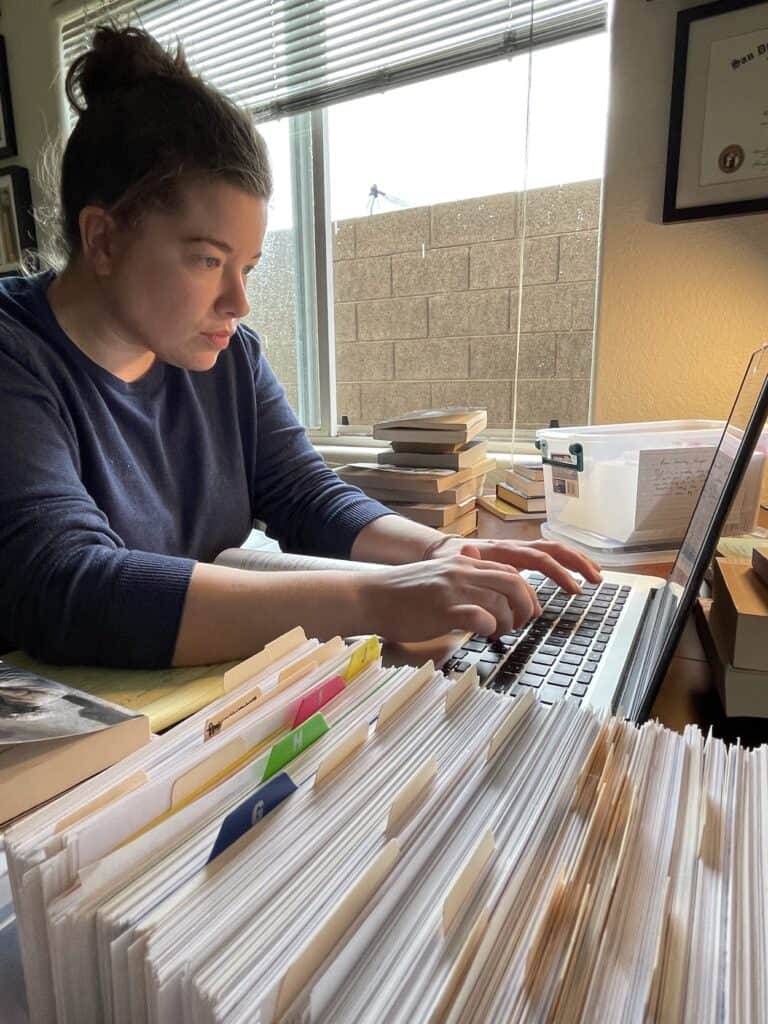
Each morning, I sit down at my desk and write in my journal. I put my thoughts on paper so I can untangle them, sift through them, and—when needed—gently let them go. I’m not just writing; I’m creating space in my mind for calm to step in, clearing out the clutter so I don’t drag it around all day. I try to ask myself meaningful questions. If something is bothering me, writing it down or tracing its outlines helps soften its grip. As Alain de Botton said, “What we call depression is in fact sadness and anger that have for too long not been paid the attention they deserve.”
Journaling is how we pay attention. Because if we don’t monitor our thoughts, we become vulnerable to their influence and control. We can end up living in the worst way: unconsciously. The things that agitate and derail us—materialism, lust for money or power, thinking we’re the center of the universe…what’s insidious about these things “is not that they are evil or sinful,” David Foster Wallace writes, “it is that they are unconscious.” Journaling makes the unconscious conscious.
If you don’t already have a journaling practice, try this: commit to writing in a journal for just 10 minutes every day (you can even skip weekends if you want!) for the rest of the year. You’ll be hard-pressed to find an activity more deserving of your time—or more foundational to your calm.
Read every day
I like how my friend Tommy Dixon—who gets up at 5 a.m. and reads for the first three hours—puts it: Reading can be difficult, but it’s never taxing. Reading calms and centers us, one of its many benefits. I took Tommy’s advice and started reading more in the morning. After I journal, of course.
Don’t be a jackass
In my late twenties, I wanted to do lots of things—get my degree, keep a blog, make more money, start a business, set up passive income streams, etc. The problem was that I didn’t know where to start. How could I make time for it all? Well, of course, I couldn’t. It was James Altucher’s blunt advice that opened my eyes: don’t be a jackass. Don’t bounce from one thing to another. Do one thing for a few years, then do something else for a few years. Resist the urge to do more, more, more. Ignore what other people are doing. Stay on your path, make a little progress each day, and enjoy your life. Repeat ad infinitum.
Let go of anger
“Why should we feel anger at the world?” Euripides pondered, “As if the world would notice.” I remember hearing that and thinking, whoa. I hadn’t realized how often my default response was anger—at bad drivers, rude people, the economy, the world, the injustice of it all, the uncertainty of my own path. Want to know where all that anger got me? Prison.
Just kidding. But I was in a prison of sorts, a mental one of my own making. The world was not the problem—my perspective was. So I redirected my energy toward changing myself. I let go of anger and chose love instead. Leo Tolstoy said that peace in our hearts can begin only when we look at the world with a loving disposition, and I’ve found that to be true. A shared smile, a helping hand, an eagerness to smooth out discord, a willingness to see the good in others…the quiet understanding that we’re all connected. The more I practiced this mindset, the more at home I felt—not just in the world, but in myself.
Get back to the rhythm
Life moves fast. It’s messy, unpredictable, and full of emotions we don’t always understand. We’re all trying to figure out what the hell is going on. Some days are better than others. Sometimes we’re in a funk. The trick is not to get stuck there. Get back to your rhythm as quickly as you can. That’s what Marcus Aurelius did. He chose not to fight against the chaos but instead fight to get back to his center, to his rhythm, as soon as possible. Go through the motions if you have to, but get back to the rhythm. And remember…
No matter what, it will all be okay
The other day, my mom told me something I really needed to hear: “Just tell yourself, no matter what, it will all work out. It always does, Em. It will all be okay.”
Books Read:
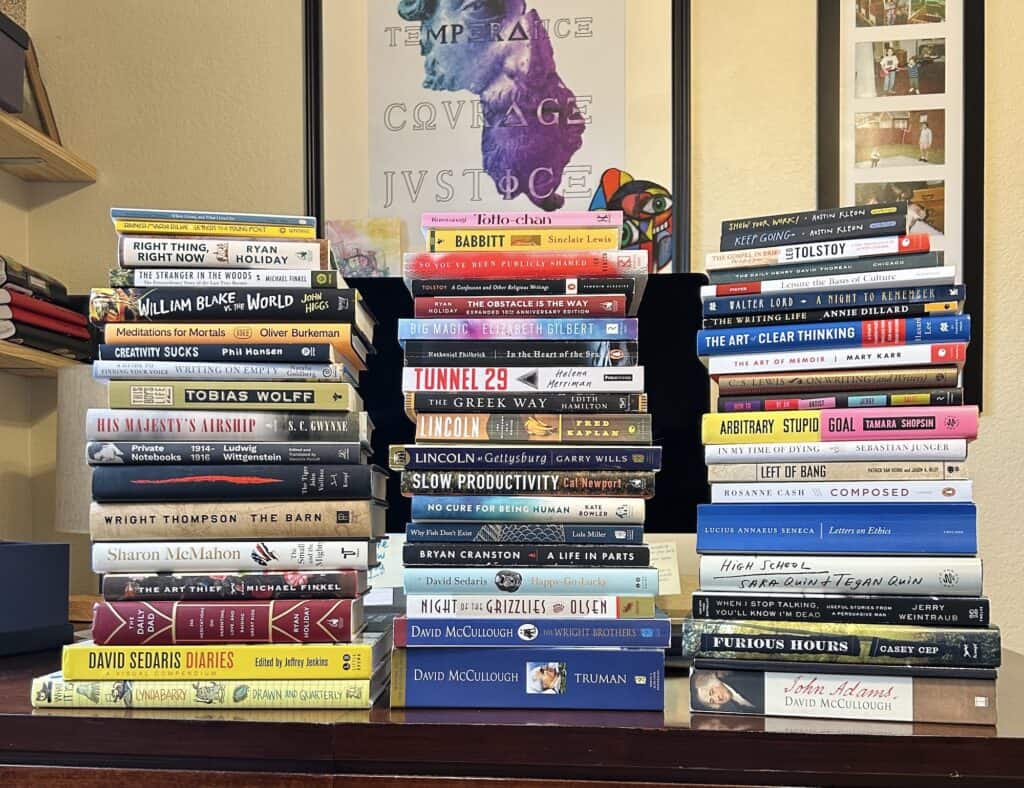
-Oliver Burkeman’s Four Thousand Weeks is one of my favorite books, so I had to pick up Meditations for Mortals. No surprise, he delivers. It’s about how to best use our limited time without stressing about how to use our limited time. Really good stuff.
-In No Cure for Being Human, Kate Bowler details her stage 4 cancer diagnosis as a young mother. She’s confronted with the big questions: what does this all mean? Why are we here? How should I spend the time I have left? Am I being selfish or selfless by following my calling? How will I know when I’m finished? Such a great book. I read this at the end of December, so I wasn’t able to put it in my best reads of 2024 list in time, but it’s one of the best reads from 2024!
–Molly’s Game by Molly Bloom was a fascinating read. Her memoir takes you deep into the high-stakes poker world—where Leonardo DiCaprio and Tobey Maguire were regulars—showing both the highs and the inevitable crash. It was gripping, fun, and full of unexpected moments (who knew Tobey Maguire was such a weirdo?). It’s a wild glimpse into a world most of us—thankfully—will never see.
-I’m obsessed with Pierre Hadot’s Philosophy as a Way of Life. Hadot reveals philosophy as a lived practice, a way to train the mind through journaling, meditation, and perspective shifts…I marked up almost every page.
-I can’t believe I hadn’t read George Orwell’s 1984—this might be one of the best books I’ve ever read. Orwell’s insights hit hard: “Until they become conscious they will never rebel, and until after they have rebelled they cannot become conscious.” The “thought police” made me appreciate how we can escape into our own minds whenever we want. Powerful, but easy to overlook. Another gem I loved was when the protagonist, Winston Smith, realized that the everyday, regular people were not mindlessly loyal to a party or an ideology, but to each other.
I’ll jot down an insight and then rush to the next thing. It’s so much easier to go, go, go than it is to slow down.
But like food, wisdom does us no good if we just consume it. We have to break it down, digest it. It must become part of us.
So I spent time reviewing my journals from this year, revisiting what I’ve learned, and reflecting on the ideas that have most inspired and changed me. If something we learn doesn’t become more valuable the better we understand it, I’m not sure it was worth learning in the first place.
Said differently, the best ideas must be constantly revisited, reexamined, and reapplied to our lives.
That’s why I made this list of 46 ideas worth revisiting again and again and again…
A calm, tranquil mind = happiness. In all things, make tranquility your aim. If a thought is agitating you, stop thinking about it. If an action needs to be calculated or will cause you to worry, don’t do it.
People rarely fear what they should. We fear losing our jobs…not about whether we’re doing something meaningful. People are afraid of immigrants…not that they’re short of breath climbing a flight of stairs. We’re afraid to start…not that we might not start. We’re afraid of dying…not afraid of never truly living.
The true measure of wealth is how much time you’re able to spend with the people you love most. Plenty of people are successful in business. Millions of people drive fancy cars. That stuff is easy. What’s harder is to moderate the impulse for more, to rewire the programming that says you’re not successful unless you make this much money or earn that coveted title. Being able to take a random afternoon off and go hiking with my wife, that’s living the dream. Besides, who’s wealthier: the millionaire who’s always dashing off to “pressing” obligations? Or the person who says, sorry, you can’t afford my hourly rate? Because that’s the other measure of wealth: how many things you can afford to say no to.
Don’t think about how long it will take. Just make a little progress each day.
Where can you eliminate the inessentials from your life? Thoreau talks about a farmer who thinks he can’t live on vegetables alone because he needs a specific nutrient for his bones, so he toils away for this bone food. Meanwhile, another farmer in a different part of the world has never heard of this bone nutrient, yet his bones are just fine. There are so many things we think we have to do. But really, most things are inessential. We can cut them out altogether. Very little input is needed from us. Nature takes care of most things.
Not wanting is the same as having; either way, anxiety is relieved.
Willingness is the key. What good is it to have done something great but against your will? If you complained while doing it? This is how people tear themselves apart, Seneca said. The body goes one way, the mind another. To do something with reluctance is foolish. We must act on our toes, not our heels.
Nature does the hard thing…and defends itself against all opposition to being spontaneously itself.
Don’t settle for doing comparatively good things. Thoreau tells the story of the Englishman who traveled to India to make a fortune before returning to England to live the life of a poet. “He should have [become a poet] at once,” Thoreau said. “‘What!’ exclaim a million Irishmen starting up from all the shanties in the land, ‘is not this railroad which we have built a good thing?’ Yes, I answer, comparatively good, that is, you might have done worse; but I wish, as you are brothers of mine, that you could have spent your time better than digging in this dirt.”
When you hear a piece of wisdom, don’t just think, “Oh, that’s great. Love it.” Spend time with it. Really think about how you can apply it to your own life. Then apply it.
Wisdom means always wanting the same things and always rejecting the same things. If an action is consistent, you can be sure it’s right.
Real dangers have inherent limits. Everything else is up to opinion and conjecture and, therefore, endless anxiety.
The best work is the work that connects the human to the divine. William Blake believed he could help society most by using his imagination and creating his art. Elizabeth Gilbert said the best kind of life is one spent digging for buried treasures inside yourself. And it doesn’t matter if you’re paid for it. (In fact, it’s better that you’re not paid for it. That way, as Elizabeth Gilbert explained, you don’t put pressure on your creativity.) It’s so important to spend time each day doing work that is its own reward.
Stop paying attention to other people’s curated lives. Your default response to most of the random information that bombards us every day should be holy shit I don’t care. Protect your time and attention more fiercely than your money and property.
If you’re a parent, use your money to help your kids now. It’s not going to do them much good to give them an inheritance when they’re 60 and no longer need it.
This is the #1 productivity/happiness rule I’ve found to be true: get up early. Give the first hour or two of the day to yourself. You can read or journal or go for a walk or sit and savor a cup of coffee or work on something you care about. (Just no getting on your phone!) The idea is to give the best part of the day, the morning, to yourself—before work, before your kids are yelling for you, before all the responsibilities of daily life demand your attention. It’s true: win the morning and you win the day.
To that add: do the hardest work of the day in the morning. That way, the rest of the day is easy.
Stop reading/watching the news. If you ask a good-humored, well-put-together person their secret, there is a zero percent chance they’ll say, “You know what’s really helped me be a better spouse? I watch a lot of news.” You can easily stay informed with a quick 3-minute weekly news scan.
Our lifetime is short, a mere blip, the length of a pinprick. There are no vast amounts of time in our lives; how can there be a vast amount of basically nothing? Seneca asked. When we say something happened just now, that “just now” covers a fair portion of our lives, including the past, because our whole lives are so short. So we must be mindful of how we spend even “small” amounts of time—they account for much of our life!
One of the problems with materialism is that too much attention on stuff dims the natural beauty of all around you. The people in your life are the brightest, shiniest things of all. Life, like a great story, is about people.
It’s not intelligence but original thinking that will set you apart. Have some controversial ideas, too.
Don’t think you need to read every book cover to cover. Something I want to do more of this coming year: more scanning, more diving in and out of books. Not letting a book sit endlessly on the shelf just because I think I have to read all of it.
“The happy life is just one life,” Seneca said. It’s an error to compare your life to anyone else’s because your life is the only one you can possibly live. Another person’s life has no bearing on your happiness. If a person lives longer or bigger or more far-reaching, it does not follow that they live better. A life can be measured only by its ownfullness. If you’re fulfilled, what does it matter how someone else is fulfilled? One eats less, the other more. What difference does it make? Both are filled.
Diseases of the mind are the hardest to detect. The healthier we think our mind, the sicker it is.
Value your time more than your income. Instead of trying to create more income, Thoreau built a small house in the woods and decided to create more time. Instead of seeing how much he could accumulate, he wanted to see how much he could do without. He found that by keeping his needs minimal, he could get by working just one day a week and take the other six off. Time is what makes a person happy, he said. Not fame or money. Time. Time for contemplation. Time for exploration. Time for your loved ones. Time for yourself. Time is happiness.
Seeking praise will lead you astray.
I recently heard a successful, near-retirement-age CEO of a midsize company say that if she were to sit down for breakfast in the morning with her husband and look at her calendar and have no meetings or business-related items on her to-do list for the day, that would be her biggest nightmare. And she was proud of it. I felt kind of bad for her. It made me think of what Josef Pieper said, that overwork can trick you into thinking you’re living a fulfilled life.
You shouldn’t read books to impress people or as a way to escape. Reading should be for figuring things out, for understanding yourself and the world, for challenging yourself, and for learning from the experiences of others. (Here are some great recommendations!) A biography might take weeks to read, but the lessons you learn can save you decades of personal trial and error. That’s why even though it’s time-consuming, readingwill always be the ultimate shortcut.
The two tasks you have in life: be good and become more of yourself (by pursuing work you love).
To create real change, you must learn how to attract and wield power.
Done is better than good. Make stuff and put it out there. Who cares what other people think? Seriously, who cares? Stop worrying. As Marcus Aurelius said, ‘There’s no need to be anxious. Nature takes care of it all. Soon enough you’ll be dead, and the people who remember you will die too.’
Trust yourself. It’s not that geniuses have all these great thoughts the rest of us don’t have, Alain de Botton said, it’s that they take them more seriously.
Don’t be content with quoting others. You have to bring your own thoughts to the table.
How much time do I waste entertaining every random thought that pops into my head?
Better to waste money than time.
You can’t just think your way into good ideas. You have to roll up your sleeves and do the work in front of you. Breakthroughs are often hidden in hard work.
Serve the work. Don’t impose your will on it. Let it be what it wants to be.
Mornings are great for idea-generating.
In every moment, for every person, there is the opportunity for complete happiness because there is an opportunity to practice a virtue. In this way, happiness has a fixed limit. Once fulfilled, any additional pleasures can only slightly enhance it. In other words, there’s no need to take the long way; happiness is available right now, in the next reasoned action we take. It’s right in front of us. We just need to grab it.
Who’s going to give you back your time?
Important work—not urgent work—should make up the biggest portion of your day. Don’t get sucked into doing task after task after task. Too many urgent things on your to-do list might indicate a lack of planning.
If everything you do is simply what you do, then there’s nothing to calculate and no reason to hesitate. There is no “being brave”; there is just being yourself. ‘That was a really brave thing for her to do.’ No, that was a really her thing for her to do. That’s what she does. She moves from one necessary activity to the next and regards the outcome as irrelevant.
Grateful is the best state of being. It is divine. At the end of my life, I hope to leave grateful and without complaint, as Marcus Aurelius said, “like an olive that ripens and falls. Praising its mother, thanking the tree it grew on.”
Don’t be satisfied with doing work that gets you by. Find work to be invested in. You get one life. Why would you spend it doing things you don’t care about? I love how Elizabeth Gilbert put it: “What else are you going to do with your time here on earth—not make things? Not do interesting stuff? Not follow your love and your curiosity?”
A great way to live: follow your interests and share them with the world.
–The Small and the Mightyby Sharon McMahon was one of the best of the best books I read this year. It’s full of mini-biographies of real people who were powerless by society’s standards but created their own power through creativity, daring, and perseverance. These lesser-known but arguably most important characters of history accomplished more than probably what even they thought was possible. It’s hard to read this book and not be inspired. It’s seriously so good.
-Oh my goodness, The Night of the Grizzliesby Jack Olsen is SO good. In 1967, Montana’s Glacier Park allowed campers to feed the grizzly bears. After dinner, they would throw table scraps down from the lodge and onto the campgrounds to watch the grizzlies dine. Warnings are ignored, and the suspense ratchets up because we know what’s going to happen: two nineteen-year-old women are killed on the same night by two different grizzlies in two separate locations.
-I loved Lincoln: The Biography of a Writerby Fred Kaplan. It’s a biography of Lincoln in the context of the books he read and how they shaped his thinking and writing. Lincoln believed the written word to be humanity’s most important invention—an invention he used to create his most famous speech and forever shape how we view America…
–Lincoln at Gettysburgby Garry Wills is another one of the best books I read this year. Lincoln was a master of persuasion. Today’s politicians speak in polarizing, black-and-white, us vs. them terms, so it was especially refreshing to read Lincoln’s speeches. Any crowd he spoke to, he always found the common ground, the ‘Hey, I want what you want’ approach. And this approach wasn’t a ploy—he did want what they wanted because he knew that all people mostly want the same things; all the rest was rhetoric. He instinctively knew how to speak to people on both sides. Just a master communicator. And what I learned has helped me tremendously in my own conversations with people. I marked and dog-eared almost every page.
–I got some great stuff from Cal Newport’s book on productivity without burnout. Slow Productivityconsists of three things: do less, work at a natural pace, and obsess over quality.